
Sacred Medicine Explained
What Is DMT?
One experience. Two ways of understanding.


The Spiritual Lens
When the Everyday
Mind Grows Quiet
DMT can quiet the noise of the everyday mind and open the door to a deeper state of awareness. Many describe feeling more connected to themselves, to the universe, and to something greater—creating space to shift perspective, look within, and experience life through a more open heart.
DMT is known for producing profound alterations in consciousness that many individuals describe as mystical or spiritual. During these experiences, ordinary perceptions of time, space, and personal identity may temporarily dissolve, giving rise to sensations of unity, interconnectedness, and transcendence. Some individuals report vivid imagery, encounters with seemingly intelligent presences, or the feeling of entering an entirely different realm of existence.
One of the most fascinating phenomena associated with DMT is ego dissolution, a temporary fading of the boundaries that normally define our sense of self. Researchers have also identified similarities between DMT experiences and near-death experiences, including feelings of timelessness, profound peace, and connection to something greater. While these experiences can feel extraordinarily real and meaningful, their spiritual interpretations remain deeply personal.
Throughout spiritual traditions, altered states of consciousness have inspired questions about the nature of reality, the soul, and our connection to the universe. In spiritual language, some describe these moments as a thinning of the veil between worlds—as though the boundary separating everyday awareness from an unseen realm has briefly become more transparent. This is a metaphor for how extraordinary and convincing such experiences can feel, rather than evidence that another world has been reached. DMT continues to contribute to these conversations, offering a fascinating intersection between modern consciousness research and humanity’s timeless search for meaning.
“Beyond the familiar boundaries of perception, where the sense of self fades and time and space take on new meaning, lies one of consciousness’s greatest mysteries.”
The Scientific Lens
When Familiar Patterns
Begin to Shift
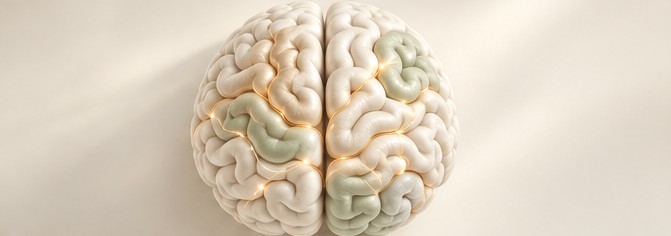
DMT (N,N-dimethyltryptamine) is a psychedelic compound that can temporarily change how different parts of the brain communicate with one another. Normally, the brain relies on familiar patterns to organize thoughts, memories, emotions, and our sense of who we are. DMT can temporarily disrupt some of these usual patterns, allowing new or unusual connections between brain networks to emerge.
DMT — N,N-Dimethyltryptamine
DMT is a naturally occurring compound found in many plants, and trace amounts have also been detected in mammals, including humans. It belongs to the tryptamine family and is structurally related to the neurotransmitter serotonin.
Some well-known botanical sources include Psychotria viridis (chacruna), Diplopterys cabrerana (chaliponga), and Mimosa tenuiflora (jurema). In traditional Amazonian ayahuasca preparations, a DMT-containing plant is combined with another plant containing MAO-inhibiting beta-carbolines, which allows orally consumed DMT to remain active.
Spiritual interpretations are personal. Scientific research describes changes in brain activity and experience, but it does not prove any one spiritual meaning.